Guide
How to froth milk at home
Café-style foam for lattes, cappuccinos and cold foam takes under a minute with a handheld frother. Here's how to get it right every time.
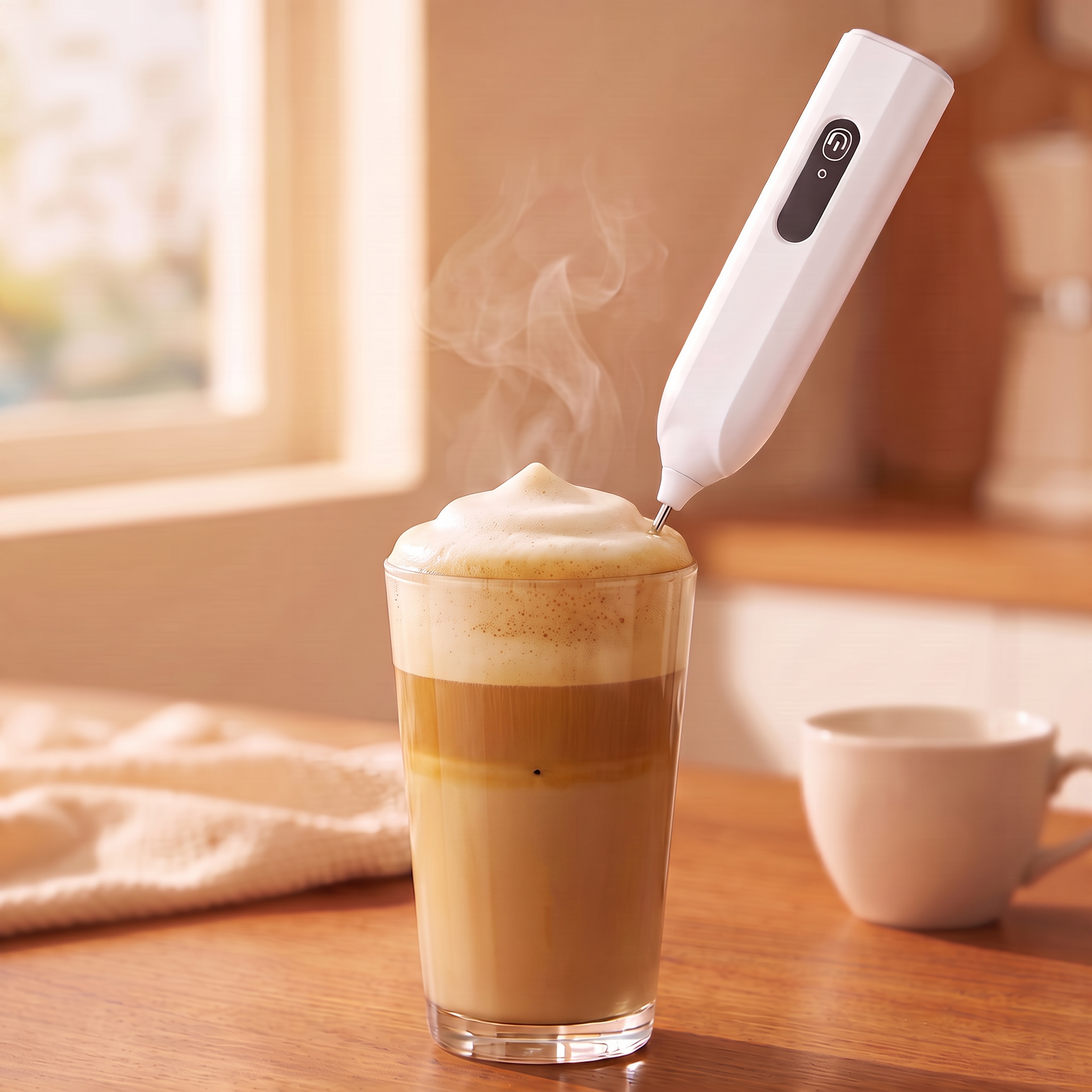
Step by step
- 1
Pick your milk
Whole dairy milk gives the richest, most stable foam. Oat milk (especially barista versions) and soy also froth well; almond milk makes lighter, airier foam.
- 2
Warm it — don't boil it
For a hot latte, heat about 150–200 ml of milk until steaming but not bubbling, around 60–65°C (140–150°F). Too hot and the foam collapses and tastes flat. For cold foam, use milk straight from the fridge.
- 3
Use a tall cup
Fill a tall mug or glass no more than one-third full. Foam roughly doubles the volume, and the extra height stops splashing.
- 4
Submerge, then switch on
Dip the whisk just under the surface before turning the frother on. Start on the lowest speed so milk doesn't spray, then step up once it's spinning.
- 5
Froth for 15–30 seconds
Hold the whisk slightly tilted near the top to pull air in, then lower it to smooth big bubbles into creamy microfoam. Stop when the milk has grown and looks glossy.
- 6
Tap, swirl and pour
Tap the cup on the counter to pop large bubbles and swirl gently. Pour over your espresso, coffee, matcha or hot chocolate, spooning foam on top.
The frother we use
Our handheld milk frother has 3 speeds, charges by USB-C and comes in 4 colours. Free 5–12 day tracked shipping over $65.
Shop the milk frotherDrinks to make
Latte
Espresso or strong coffee topped with warm frothed milk and a thin layer of foam.
Cappuccino
Froth a little longer for thicker, drier foam and use equal parts coffee, milk and foam.
Iced cold foam
Froth cold milk (a splash of vanilla or maple helps) and spoon it over iced coffee.
Matcha latte
Whisk matcha with a little hot water first, then top with frothed milk.
Making matcha? See our matcha guide.
Troubleshooting & care
- Foam won't form? The milk may be too hot or too old — try fresh, cold milk and heat it more gently.
- Milk spraying everywhere? Turn the frother on only after the whisk is under the surface, and start on low speed.
- Big bubbly foam? Lower the whisk deeper for the last few seconds and tap the cup to settle it.
- Clean it right away: run the whisk in a cup of warm soapy water for a few seconds, then rinse and dry. Never submerge the handle.